All you need to know to about Stonehenge
There is so much to wonder about Stonehenge, and we are here to help answer every and any question you may have about visiting Stonehenge.
We hope the site helps you to know all you need prior to your visit to ensure you have the best experience possible. We tell you how to see Stonehenge for free, but also how to get discount tickets, and the best London to Stonehenge tours available to buy online.
Touch the Stones at Stonehenge
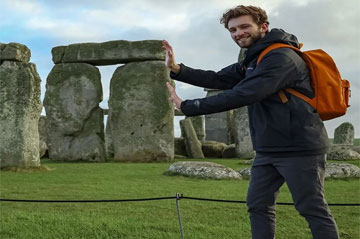
Have you ever wanted to touch the stones at Stonehenge? Now, you can! Just follow these simple steps, and you’ll be able […]
Visiting Stonehenge with Children
What can you expect? Visiting Stonehenge is a fantastic day out to do with the kids, and the attraction has it all. […]
Can I see Stonehenge for free?
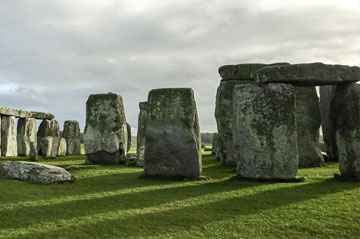
This is one of the most popular questions we get from visitors to London who are on a budget but who want […]

Top 10 Pubs Near Stonehenge
Wiltshire is renowned for its history, gorgeous scenery, and great country pubs. About 90 miles west of downtown London, in the county […]
Top 15 Interesting Stonehenge Facts
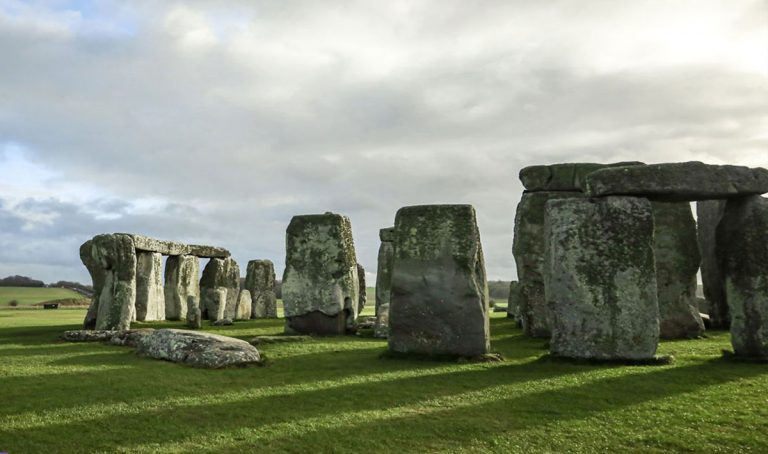
Despite millions of visitors travelling to theUnesco World Heritage site of Stonehenge every year, we are no closer to knowing how and […]

Top 10 Things To Do Near Stonehenge
If you want to visit Stonehenge, but do not want to spend the whole day there, then have no fear; there are […]
Reviews from visitors to Stonehenge
Our afternoon at Stonehenge was the best couple of hours spent in the UK! The Stones were fantastic and the experience centre brought it to life! A great trip out of London for all the family!
Pippa Rogers, New York USA
We had a great time seeing Stonehenge while also visiting Windsor Castle and the Roman Baths. It was also useful being able to take the shuttle bus to the Stones from the Visitor Centre as my wife isnt the best walker and so it made for a more relaxing experience.
David Williams, California USA
I have visited many National Trust sights across the UK but Stonehenge is my favourite by far. I recently went for Summer sostice and it was amazing to experience the vibe and it was a bit surreal to think that people have been doing this for thousands of years.
Amanda B, Warrington UK
Useful Information For Your Visit to Stonehenge
Across the site, we will try and give you all the information you need to visit Stonehenge. From how to get to Stonehenge to what to expect while there. So, if you are passing by on your way to somewhere, we can help you know the best way to see the Stones, or if you want to take a whole day out to come and tour Stonehenge, we will give you all the information you need to ensure you make the most of your time without any additional expense.
Of course, if you still have other questions that we don’t answer on the site or in our FAQ’s then please don’t hesitate to contact us, and we can help you directly.
Best way to get to Stonehenge
Whether you are walking (probably don’t!), driving or taking a train, we have a guide to help you find the best way to visit. For example, suppose you are visiting Stonehenge from London and driving. In that case, the journey will take between 90 minutes and 2 hours, depending on traffic conditions. However, there is also a mainline train station nearby in Salisbury. This means that wherever you are in the UK, there is a way to visit Stonehenge using public transport if needed.
Best time to see Stonehenge
Stonehenge is open all year round, and the sight is still remarkable whether you see it in the Summer or winter. However, there are times when it is quieter or cheaper, and you may prefer these options. We help you understand the best time to visit Stonehenge for you and what to expect, so there are no surprises when you arrive.
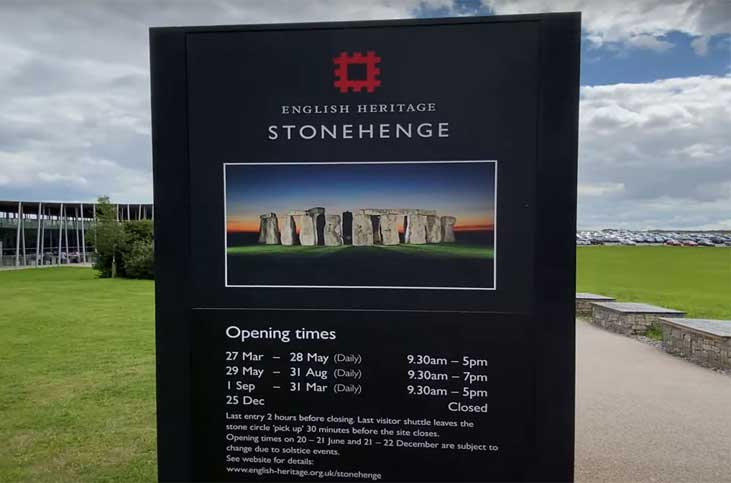
Discover when Stonehenge is open and closed, current ticket prices and changes in the year and even more to help get the most out of your visit.
FAQ’s about visiting Stonehenge
We have sourced the internet for the most frequently asked questions when visiting Stonehenge and have created a page to help answer these questions. While we try to answer every question, sometimes there are questions we don’t foresee, so if you cannot find the answer you are looking for, please don’t hesitate to reach out to us directly by email.
What else is there at Stonehenge?
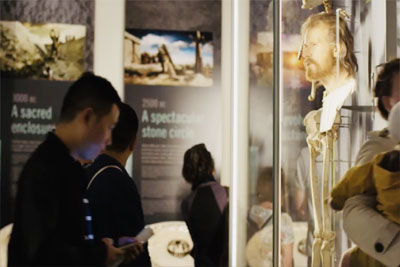
There is so much to see when you are at Stonehenge. From the neolithic houses, you can look around that show you what life was like over 4000 years ago. There is also the cafe which seats over 100 people at any one time and allows you to rest between visiting the Stones and spending time touring the popular visitor centre. Then, of course, there are plenty of facilities for those with young children to ensure you are looked after. With baby-changing facilities, highchairs in the cafe, and you can take pushchairs across the site. There is the Stonehenge exhibition which is in the Visitor Centre. There are hundreds of artefacts on show, including human remains, which were found at within the stone circle and will bring to life the stories of the people who lived there. Finally, a gift shop on-site offers a great range of books and souvenirs so that visitors of all ages can take something to remember their time.
Take an organised tour to see Stonehenge
If you want to visit Stonehenge but don’t have access to a car or are unsure about public transport, then we would recommend an organised Stonehenge tour. These tour companies often pick up from a central London location (usually Victoria Coach Station). They will take you to Stonehenge and other famous UK attractions, show you around, and then get you back to central London in the evening for dinner.
Below are some of the most popular tours to Stonehenge by visitors to London; they also include Bath, the Cotswolds, Oxford and Windsor Castle, to name a few. Depending on the rest of your itinerary, these tours usually take between 45 minutes and 2 hours at Stonehenge.
- Stonehenge Express Tour from London
- Windsor, Stonehenge and Bath Tour
- Stonehenge and Bath Tour
- Windsor, Stonehenge and Oxford Tour
- Stonehenge Inner Circle Tour, Bath and Lacock Day Trip from London with Dinner
Most common questions about visiting Stonehenge
Can people just walk up and touch the stones?
Unfortunately, since 1977 the public can no longer walk up and touch the Stones. Because of the number of people that visit this famous English Heritage site, the decision was taken to put a 10-meter barrier around the Stones for most visitors; however, there are private access tours that do allow small groups to get up close to the Stones.
When is the best time of year to visit Stonehenge?
Fortunately, Stonehenge is open all year round, so you don’t need to constrain yourself for a particular time of year. However, if you want to know the best time of year, the busiest time is between July and September and you will definitely want to pre-book your tickets to Stonehenge. Our recommendation if you want a quieter and not-so-hot time is April or October time – however, the great thing about Stonehenge is that any time of year is a good time.
How long do I need to spend at Stonehenge?
This all depends on how much detail you like to go into when visiting attractions. Some people are happy to get in, jump on the shuttle bus and spend some 20 minutes seeing the Stones and a quick wander around the visitor centre, and they are out in between 45 minutes and an hour. Other visitors will want to take their time to wander around the Stones and immerse themselves in the visitor centre and usually between this have a break for food and drink, so you would be looking at 2 to 3 hours.
Attractions nearby Stonehenge
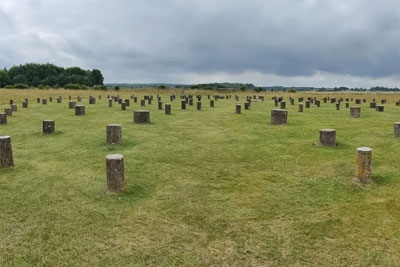
Woodhenge
A Stonehenge tour is great, but there are many other exciting English Heritage sights nearby that you might also be interested in visiting while in the Salisbury plains. One of the most popular places to visit on a day trip to Stonehenge is the Neolithic site of Woodhenge, which is only 2.5 miles away. Woodhenge was built later than Stonehenge in about 2500 BC and wasn’t discovered until 1925 through aerial photography. It picked it the outlines of dark rings amongst a wheat crop. Many people opt to walk this route while visiting Stonehenge. They stop in Woodhenge and have lunch at one of the pubs before heading back to their transport at Stonehenge.
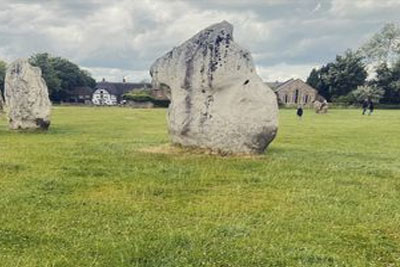
Avebury
You might also be interested in visiting Avebury, a much larger stone circle than Stonehenge. Avebury is also free to visit; therefore, you can get two great attractions for the price of one if you wish. Avebury is slightly further from Stonehenge at 24 miles so that you will need transport, but they have some great pubs if you want to have lunch there. There is a lot of debate surrounding which is better to visit, but don’t underestimate Avebury as they also have a great museum that helps bring to life this popular attraction. However, we have tried to help answer this with a helpful article about which of the ancient sites of Avebury or Stonehenge is better, and then you can decide.
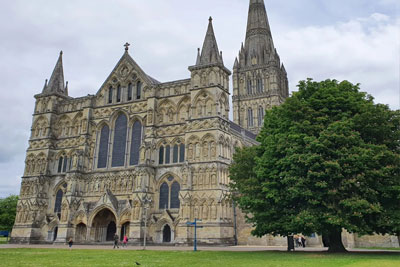
Salisbury
Finally, one of the most popular places for people to visit when seeing Stonehenge is Salisbury which is just 10 miles away and has a mainline train station that is the nearest train station to Stonehenge. At Salisbury is the famous Salisbury Cathedral which is over 800 years old and houses one of four original copies of the Magna Carta, which was written in 125. Many sightseeing tours include Salisbury as one of the destinations alongside Stonehenge. Be aware that you have to pay to go into the cathedral but there is free entry for under 13’s.
All about Solstice at Stonehenge…
VISIT STONEHENGE FOR SOLSTICE
There are two periods of Solstice at Stonehenge, Summer Solstice and Winter Solstice. The biggest event of Stonehenge’s year is Summer Solstice, where the sun will rise over Heel Stone (22nd June 2022), and this rise is seen through the gap in the outer circle. On this day, English Heritage opens Stonehenge early and lets visitors come in and experience the party atmosphere. On this day, you can also walk amongst the Stones, something you are not usually allowed. Many will touch the Stones during this experience. It’s quite magical to think that this ritual has been happening for over 5000 years at this ancient site, which is why it’s such a spectacle to see. Often the druids will visit Stonehenge at these two times of year to celebrate these two key calendar events as part of their pagan history.